Personalised meal plan: method and template
Personalised meal plan: dietitian's method, meal structure, goals, and follow-up. Difference with the food diary. Template to download.
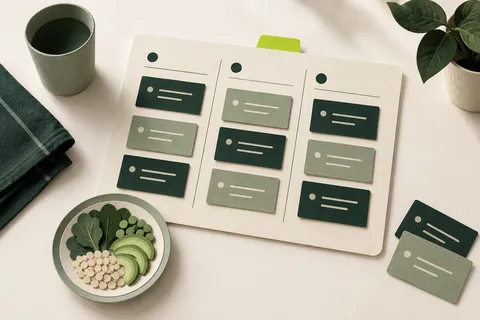
The meal plan is one of the key deliverables of a dietary consultation. Well-constructed, it translates goals into concrete and sustainable guidelines rather than prohibitions.
This page details a construction method, what a good plan contains, and offers a template, not to be confused with the food diary, which is filled out by the patient.
Meal plan or food diary?
These two documents are complementary but distinct:
- The food diary is filled out by the patient: they note what they eat over a given period. It is an observation tool, useful beforehand.
- The meal plan is created by the dietitian: it proposes a meal structure and guidelines adapted to the goals. It is an action tool, provided after the analysis.
In practice, the diary feeds the analysis, and the plan flows from it.
A five-step method
- Assessment and clinical history. Habits, tastes, constraints (budget, time, culture, health), shared goals.
- Goal setting. Realistic, prioritised, measurable, co-constructed, not imposed.
- Meal structure. Distribution throughout the day, overall balance, portion guidelines, substitution ideas.
- Personalisation. Adaptation to preferences and constraints, to encourage long-term adherence.
- Follow-up and adjustment. Progress reviews, re-evaluation, modification of the plan based on feedback.
What a good plan contains
- structural guidelines (meal composition, frequencies) rather than anxiety-inducing counting;
- concrete examples and alternatives for variety;
- the goals for the period and points to observe;
- room for dialogue: the plan is a support tool, not a rulebook.
Meal plan template to download
A structure ready to customise after the consultation. Access the PDF by entering your email:
Caution and framework
Save time on your plans and reports
Building a personalised plan, formalising it, and following up takes time for each patient. The winning approach: start from a fixed template, standardise recurring guidelines, and formalise right after the consultation, while the discussions are still fresh.
This is what Delta allows: you capture your observations through live note-taking or post-session dictation, and the tool generates a structured document according to your template, with a longitudinal patient memory from one consultation to the next. HDS hosting, GDPR compliant.
Frequently asked questions
What is the difference between a meal plan and a food diary?
The food diary is filled out by the patient to record what they eat (collection tool). The meal plan is created by the dietitian after analysis, to propose a meal structure adapted to the goals (action tool).
What does a personalised meal plan contain?
Meal structure guidelines, concrete examples and alternatives, goals for the period, and points to observe, all adapted to the patient's tastes and constraints.
How to build a tailored plan?
In five steps: assessment and clinical history, setting realistic co-constructed goals, meal structure, personalisation according to constraints, then follow-up and adjustment.
Can a dietitian prescribe a diet?
They act within their scope of practice. In the presence of a pathology, the plan is designed in coordination with the doctor and does not replace medical care; unjustified restrictive diets should be avoided.
Should the plan be rigid?
No: it is a support tool, reviewed and adjusted throughout the follow-up based on the patient's feedback.
Personalised plans formalised in minutes
Delta generates your plans and follow-up reports from your live observations or dictation.
Try for free